
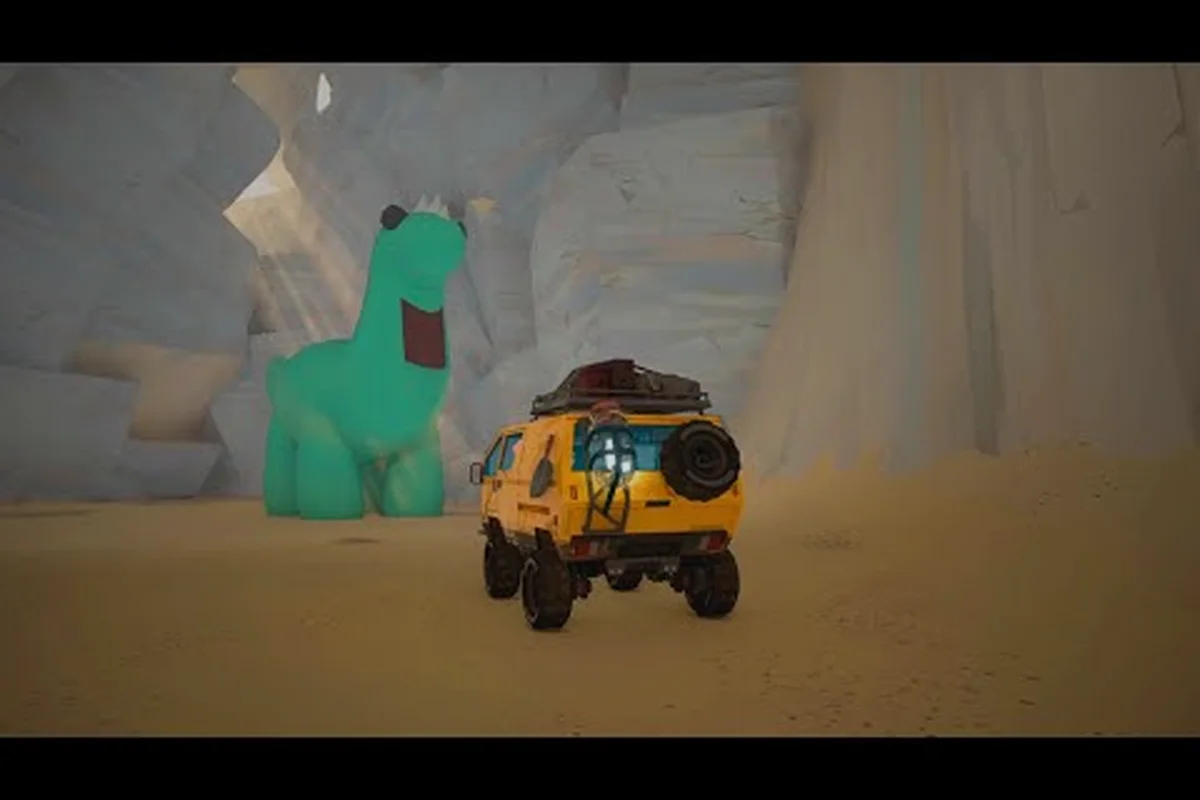
Caravan SandWitch map secrets are scattered across the planet Cigalo, and knowing where to look transforms a simple road trip into a full archaeological expedition. The world hides ancient ruins, abandoned robot settlements, and landmarks that never appear on your standard navigation readout, which is why most players miss a significant portion of the map on their first playthrough. Understanding how the map reveals itself through antenna scans, van upgrades, and story progression is the key to reaching every corner of this Sci-Fi Provence-inspired world.
Studio Plane Toast designed Cigalo as a hopeful post-apocalypse where four distinct groups coexist: the Reinetos (an old aboriginal species), robots left behind after planetary exploitation, humans who stayed behind, and the mysterious SandWitch. Each group occupies different regions of the map, and their territories hide unique secrets that reward thorough exploration. This guide breaks down the hidden landmarks, ruin locations, and map secrets that most players overlook, with specific coordinates and upgrade requirements so you can plan your route efficiently.
The Map Structure and How Secrets Reveal Themselves
The Energy Grapple's Role in Revealing Hidden Ruins
The energy grapple is the pivotal tool for accessing Caravan SandWitch's hidden ruins, serving dual functions: ripping open sealed doors and powering emergency generators. The "Forced Entry" achievement triggers the first door ripped with the grapple, while "Emergency Generator" marks the first power activation. Ruins requiring the grapple are visually distinct—sealed metallic doors with visible hinges and generator sockets. Early-game ruins in Estello Village only need the basic grapple, but desert ruins require the upgraded version with extended cable length. Map your route to collect grapple upgrades before tackling the Provence-like desert's buried structures.
The Reinetos Ruins and Their Environmental Storytelling
The Reinetos, Cigalo's aboriginal species, left ruins that function as both lore repositories and gameplay checkpoints. Unlike human-built structures, Reinetos ruins feature organic, curved architecture that blends into the landscape, making them easy to miss without antenna scans. These ruins often contain Rare components in puzzle rooms requiring environmental manipulation—redirecting energy beams or aligning ancient mirrors. The "Mind the Gap" achievement's train sequence passes near several Reinetos ruins, offering early access to their puzzle mechanics. Compare their layout to human ruins: Reinetos structures prioritize vertical exploration, while human ruins emphasize horizontal corridor navigation.
Cigalo's map does not show every location from the start, and that is intentional. The game gates areas behind both story progression and van upgrades, which means the map secrets you can access early differ dramatically from what becomes available after Chapter 2. The official website describes the world as a journey across a Sci-Fi Provence-like world, and that comparison holds true in the map design—rolling hills, abandoned industrial sites, and ancient stone structures blend together in a way that makes hidden paths easy to miss.
The primary way the map reveals itself is through antenna scans. When you activate an antenna, it pulses a scan that marks nearby points of interest on your map, including component caches, robot settlements, and sometimes hidden ruin entrances. However, the scan only covers a limited radius, and some secrets sit just outside that radius, requiring multiple scans from different angles or manual exploration to discover. According to community reports, the antenna scan radius is roughly 200 meters, though this varies by antenna type and elevation.
Elevation plays a critical role in map discovery because Cigalo's terrain is heavily vertical. The van can only climb certain slopes, and many hidden landmarks sit on plateaus or in valleys that require specific tools to reach. The grappling hook, which you unlock early, opens up cliffside paths, while the energy grapple (a later upgrade) powers ancient mechanisms that reveal underground sections. Players who rush the main story often miss entire regions because they lack the tools needed to access them.
The map also hides secrets through visual storytelling. A broken robot lying near a cliff edge, a row of ancient stones forming a path, or a suspiciously flat wall in a ruin—these environmental cues point to hidden locations. The game never marks these on your map, but observant players can follow them to discover caches of components, lore entries, and even alternate routes between regions. For a complete breakdown of every region and how they connect, the Caravan SandWitch world map guide covers the full layout in detail.
| Map Feature | How It Reveals | Tool Requirement | Notes |
|---|---|---|---|
| Antenna scans | Activates on interaction | None (early game) | Marks POIs within ~200m radius |
| Cliffside paths | Visual cue (rope, ledge) | Grappling hook | Unlocks in Chapter 1 |
| Ancient mechanisms | Energy nodes visible | Energy grapple | Requires Chapter 2 progression |
| Underground ruins | Hidden entrances | Door ripper | Often blocked by metal doors |
| Robot settlements | NPC interaction | None | Some require story triggers |
Hidden Ruins and Their Access Requirements
The ruins scattered across Cigalo are the richest source of map secrets, containing rare components, lore fragments, and sometimes entire side quests. Each ruin type has different access requirements, and understanding these before you set out saves hours of backtracking. The game categorizes ruins into three main types: Reinetos ruins (ancient stone structures), human ruins (abandoned industrial facilities), and robot ruins (derelict mechanical complexes). Each type appears in different regions and requires different tools to fully explore.
Reinetos ruins are the most visually striking, featuring massive stone arches and carved symbols that tell the story of Cigalo's original inhabitants. These ruins often require the energy grapple to activate ancient power nodes, which open hidden chambers containing Exceptional components (purple hexagons) and lore tablets. According to the Steam Community 100% Achievement Guide, several achievements tie directly to exploring these ruins, including the "Forced Entry" achievement for ripping open your first door with the grappling hook.
Human ruins are typically industrial sites—old factories, research stations, and transport hubs left behind when most humans evacuated. These structures are easier to enter but contain more environmental puzzles. The door ripper tool is essential here, as many interior rooms are sealed with metal doors that require this upgrade. Inside, you will find Common and Uncommon components (green and red), along with data logs that flesh out the story of why humans left Cigalo.
Robot ruins are the most mechanically complex, featuring conveyor systems, broken assembly lines, and dormant robot bodies. These areas often require the zipline tool to traverse gaps between structures, and some sections only activate after you complete specific story missions. The rare components found here (yellow rarity) are essential for late-game van upgrades, making these ruins a priority for completionists. The Caravan SandWitch desert locations guide details the specific ruins found in the desert region, which contains the highest concentration of Exceptional components.
| Ruin Type | Region | Key Tools | Best Components | Notable Secrets |
|---|---|---|---|---|
| Reinetos ruins | Highlands, Desert | Energy grapple | Exceptional (purple) | Lore tablets, hidden chambers |
| Human ruins | Estello, Residential | Door ripper | Common, Uncommon | Data logs, side quests |
| Robot ruins | Industrial zones | Zipline, Grappling hook | Rare (yellow) | Assembly puzzles, robot NPCs |
Landmarks That Never Appear on the Map
Component Rarity Tiers and Their Map Distribution
Components on Cigalo spawn in four distinct rarity tiers tied directly to map progression. Common (green) components scatter across ground level, rooftops, and ruins in early zones like Estello Village, Rose's Retreat, and Hydropost. Uncommon (red) variants require climbing old vehicles or robot husks. Rare (yellow) components only appear inside puzzle rooms, with density increasing after Chapter 2 unlocks the desert. Exceptional (purple hexagons) spawn exclusively in the desert area, demanding advanced tools like the energy grapple to reach. Prioritize desert exploration for Exceptional components—they craft the highest-tier van upgrades.
Fast Travel Beacon Placement and Route Optimization
Fast travel beacons unlock through antenna scans, with the "Scanning" achievement marking your first successful scan. Each antenna hack reveals nearby beacons and marks component caches on the map. Optimal routing prioritizes scanning antennas in a clockwise pattern around Cigalo's map, as each scan reveals beacons within roughly a quarter of the map's radius. The "Cyber Intrusion" achievement triggers on your first antenna hack. Chain scans efficiently—unlocking the desert region's beacons early reduces backtracking for Exceptional components, which only spawn in that biome and require frequent return trips.
Some of the most memorable Caravan SandWitch locations never appear on your map at all, even after antenna scans. These landmarks are purely environmental discoveries, rewarding players who explore off the beaten path. The game's art direction encourages this behavior—a distant silhouette, an unusual rock formation, or a glint of light in the distance all signal something worth investigating.
The Sunken Train is one such landmark, located in the eastern marshes. This derelict train sits half-submerged in the water, its cars partially buried in sediment. Players who explore the interior find a series of data logs that reveal the story of Cigalo's evacuation, along with a cache of Uncommon components. The train is visible from a nearby ridge, but nothing on the map marks its location, and the antenna scan at the closest tower does not pick it up due to the low elevation.
The Glass Garden is another hidden landmark, found in a small valley northwest of the Residential Area N-337. This abandoned greenhouse contains a collection of mutated plants, and the glass panels create a beautiful light show during sunset. More importantly, the garden contains several Rare components hidden among the planters, along with a lore entry that hints at the SandWitch's connection to the planet's ecology. Community reports suggest the garden was added in a later patch, as early players found the valley completely empty.
The Robot Graveyard sits at the edge of the desert region, a field of half-buried robot bodies that stretches for several hundred meters. This landmark is both visually striking and mechanically useful—the robot bodies contain salvageable components, and one specific robot (marked by a unique paint scheme) holds an Exceptional component. The graveyard also serves as the location for a side quest involving a grieving robot who wants to recover memories from its fallen companions.
The Observatory is perhaps the most rewarding hidden landmark, located on a high plateau in the highlands. This abandoned astronomical facility contains a working telescope that triggers a unique cutscene when you interact with it, revealing a panoramic view of Cigalo and hinting at the planet's true nature. The observatory also contains a locked room that requires the energy grapple to open, housing one of the game's best lore entries about the SandWitch's origins.
| Hidden Landmark | Region | How to Find | Reward | Tool Required |
|---|---|---|---|---|
| The Sunken Train | Eastern marshes | Visible from ridge, no map marker | Data logs, Uncommon components | None |
| The Glass Garden | Northwest valley | Explore off-path, no marker | Rare components, lore entry | None |
| The Robot Graveyard | Desert edge | Follow robot trail | Exceptional component, side quest | None |
| The Observatory | Highlands plateau | Climb cliffside path | Cutscene, lore entry | Energy grapple |
Tool Progression and Map Access Order
The order in which you unlock tools directly determines which map secrets you can access, and planning this progression saves significant backtracking. The game introduces tools in a specific sequence, but you can choose which upgrades to prioritize at the garage. Understanding the full tool list and their map implications helps you plan an efficient exploration route.
The grappling hook is your first tool, unlocked early in Chapter 1. It allows you to reach elevated ledges and cross gaps, opening up cliffside paths and the upper floors of ruins. Many early map secrets require only this tool, making it the foundation of your exploration toolkit. The door ripper comes next, letting you tear open sealed metal doors in human ruins. This tool is essential for accessing interior spaces and completing several early side quests.
The zipline tool unlocks in Chapter 2 and dramatically expands your movement options. Ziplines connect distant structures, allowing you to cross large gaps and reach isolated platforms. Several robot ruins require this tool to fully explore, and some hidden landmarks are only accessible via zipline networks that are not immediately obvious. The energy grapple is the final exploration tool, unlocking ancient Reinetos mechanisms and powering energy nodes. This tool opens the most significant map secrets, including hidden chambers in Reinetos ruins and the Observatory's locked room.
Component farming directly supports tool progression, as each upgrade requires components of specific rarity tiers. Common components (green) are scattered across ground level in early zones like Estello Village and Rose's Retreat. Uncommon components (red) appear on old vehicles and robots, often requiring the grappling hook to reach. Rare components (yellow) hide in puzzle rooms and become more plentiful after the desert unlocks in Chapter 2. Exceptional components (purple hexagons) only appear in the desert area and require advanced tools to collect. For a detailed breakdown of which upgrades to prioritize, the Caravan SandWitch map areas guide offers a region-by-region approach to unlocking the full map.
| Tool | Unlock Chapter | Map Secrets Unlocked | Component Cost (Typical) |
|---|---|---|---|
| Grappling hook | Chapter 1 | Cliffside paths, upper ruins | Common (green) |
| Door ripper | Chapter 1 | Interior rooms, sealed doors | Common + Uncommon |
| Zipline | Chapter 2 | Distant platforms, robot ruins | Uncommon + Rare |
| Energy grapple | Chapter 2 | Ancient mechanisms, hidden chambers | Rare + Exceptional |
Fast Travel and Efficient Secret Hunting
Once you know where the map secrets are, the next challenge is reaching them efficiently. Cigalo is a large world, and driving across it takes time, especially when you are hunting for hidden landmarks that require specific tools. The game's fast travel system helps, but it has limitations that players need to understand.
Fast travel points unlock when you activate antennas, and each antenna opens a travel destination. However, not all antennas are easy to reach—some sit on high cliffs or in remote areas that require significant exploration to activate. The Caravan SandWitch fast travel locations guide explains the full system, including which antennas are worth prioritizing for efficient map coverage.
Route planning is essential for efficient secret hunting. Before setting out, check which tools you have and which secrets are accessible with those tools. Group nearby secrets together to minimize driving time, and use fast travel to jump between regions rather than driving across the entire map. The van's speed upgrade also helps, reducing travel time between locations significantly.
Elevation shortcuts are another efficiency trick. Many map secrets sit at different elevations, and the driving routes between them can be circuitous. The grappling hook and zipline allow you to bypass long driving sections by climbing directly to higher elevations. Learning these shortcuts cuts exploration time by up to 30 percent, according to community reports on the Stantin Gaming full walkthrough.
Night exploration reveals different details than daytime exploration. Some landmarks are only visible at night—the Glass Garden glows softly in the dark, and the Observatory's telescope only works after sunset. Plan your exploration route to include night visits to these locations, as you cannot trigger their unique events during the day.
Community Discoveries and Ongoing Secrets
The Caravan SandWitch community continues to uncover map secrets months after release, and some discoveries suggest the map contains more than initially apparent. Players on the official Discord and Steam forums have documented several unusual findings that point to hidden content not covered in any official guide.
The Sealed Door in the Desert is one such discovery. Deep in the desert region, players found a metal door that does not respond to the door ripper, and no known tool can open it. The door features a unique symbol not seen elsewhere in the game, and datamining efforts have not revealed what lies behind it. Some players speculate it is cut content, while others believe it relates to a future update or DLC.
The Singing Stones are another community discovery, found in the highlands. A circle of standing stones emits a faint hum when you stand in the center, and the pitch changes depending on your position. Players have documented multiple melodies, but no gameplay effect has been confirmed. The stones may be purely atmospheric, or they may hide a puzzle that no one has solved yet.
The Missing Robot is a recurring NPC that appears in different locations depending on your story progress. This robot has no dialogue and no quest marker, but it always faces a specific direction, seemingly pointing toward something. Community members have tracked its positions across multiple playthroughs, and the pattern suggests it points toward the desert's sealed door. Whether this is intentional or a coincidence remains unclear.
The SandWitch's Trail is perhaps the most intriguing community discovery. Following a specific sequence of environmental cues—broken fences, disturbed sand, and oddly placed rocks—leads to a series of locations that form a path across the map. The trail ends at a cliff overlooking the ocean, where a single data log describes the SandWitch's arrival on Cigalo. This discovery suggests the developers hid a narrative thread entirely through environmental storytelling, rewarding the most observant players.
Frequently Asked Questions
Are all Caravan SandWitch map secrets accessible on the first playthrough?
No, several map secrets require tools unlocked in Chapter 2, including the zipline and energy grapple. You can revisit any location after unlocking these tools, so nothing is permanently missable. However, some story events change the state of certain areas, so exploring thoroughly before advancing the main quest is recommended.
How do I find the hidden landmarks that never appear on the map?
Hidden landmarks require manual exploration and visual observation. Look for unusual environmental details—a glint of light, a broken structure, or a path that seems out of place. Antenna scans do not reveal these locations, so you must physically explore off the main routes. Community maps and guides can help, but discovering them yourself is part of the experience.
What is the best tool upgrade order for exploring map secrets?
Prioritize the grappling hook first, as it unlocks the most early-game secrets. Then upgrade the door ripper to access interior spaces in human ruins. In Chapter 2, focus on the zipline for robot ruins and the energy grapple for Reinetos ruins. This order ensures you can access the widest range of secrets with minimal backtracking.
Do map secrets respawn or reset after collecting?
No, components and collectibles do not respawn. Once you collect a component or activate a landmark, it stays collected. This means you should explore thoroughly before moving to new regions, as returning later only wastes travel time. The exception is the Missing Robot NPC, which appears in new locations after each story progression.
Are there any map secrets tied to achievements?
Yes, several achievements require exploring specific map secrets. The "Forced Entry" achievement requires ripping open a door with the grappling hook, and the "Scanning" achievement requires your first antenna scan. The 100% achievement guide on Steam Community details all 26 achievements and their map-related requirements, which is worth reviewing before your completionist run.